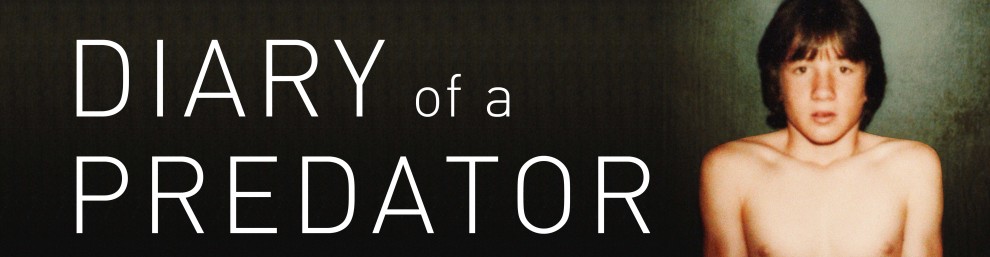
Tag Archives: Brent Brents

A Dream Realized: Barnes & Noble Book Stores Now Carrying Diary of Predator: A Memoir

Diary of a Predator: A Memoir at Barnes & Noble

Diary of a Predator: A Memoir is now available at Barnes & Noble book stores, such as this location in Boulder, Colo. | Photo by Amy Herdy

When I first started working on the true-crime book about serial rapist Brent Brents that became Diary of a Predator: A Memoir my husband told me he would no longer go to bookstores with me.

The reason? I would walk past some of the trite or atrocious titles on the shelves and start to feel depressed. It wasn’t that I thought Diary of a Predator was so much better; I was just convinced it had a story–and a message–that was worthwhile, and I fretted the book would never get a chance.

I hoped, but did not expect, that I would see it on the shelf of a major bookstore. Publishing statistics show there are more than 100,000 new books published every year, yet most bookstore chains (like Barnes & Noble) stock only a fraction of them–about 10,000 titles.

So I was very happily shocked when I got a call from a buyer for Barnes & Noble a few weeks ago. She said they planned to put Diary of a Predator: A Memoir in some of their top true-crime-selling stores around the country.

One such store is in Boulder, at 30th and Pear Street. I visited it the other day, and sure enough, there was Diary of a Predator: A Memoir, right on the shelf in the “True Crime” section.  It’s hard to describe the feeling I got when looking at my book there on the shelf. Diary of a Predator: A Memoir is the culmination of a career covering crime and out of that, the five years I devoted to the stubborn notion that this book would inspire and educate people.

And that’s the most gratifying part of all:  Hearing from folks that reading this book left them wanting to be a better person, or spread some good in the world.

So thank you, Barnes & Noble, for helping to get Diary of a Predator: A Memoir out there.

1 Comment

Filed under The story

an act of faith

Years ago, before I had even begun writing Diary of a Predator: A Memoir, when it was still just a germ of an idea that I called “The book,” Brent Brents wrote this to me:

“Someone once said that ‘every work of art is an act of faith.’  You writing this book is going to be a work of art, it is going to be an act of faith.”

I looked up the rest of the quote, and it resonated with me so much that I’m going to repeat it here. It’s from British novelist Jeanette Winterson, and it speaks to one of the main reasons I wrote this book–to reach out with its message:

“I think every work of art is an act of faith, or we wouldn’t bother to do it. It is a message in a bottle, a shout in the dark. It’s saying ‘I’m here and I believe that you are somewhere and that you will answer, if necessary, across time, not necessarily in my lifetime.”

-Jeanette Winterson

1 Comment

Filed under Brents' writings

let reality slip away

Note from Amy: The “Predator sound” Brent Brents mentions in this next post refers to the sounds made by the aliens in the 1987 movie “Predator” starring Arnold Schwarzenegger.

Well as you Know Nothing Comes easy in here. But i am managing to keep my Sanity somehow. I have to let the creepy giggles come forth now and again. Do funny mouth noises. Hell i tried all last week to get the Predator sound down, unsuccessfully.

I see so many of these guys literaly go insane. They stop having the ability to reason reality between lies and truths. Drugs violence and hatreds fester like puss in an infected wound. I’m Not Superior to any one. I’m just one of the lucky few who have support. And to smart to screw it up. One has to have people outside, if you don’t or you screw it up you become lonely and it gets really easy to let reality slip away.

Brent Brents 6-24-12

Leave a comment

Filed under Brents' writings

something more than just a band-aid

The following message was sent to this website, Diary of a Predator, and it helps remind me why I do this work:

“I just watched Paula Zahns “On the Case” about Brent Brents. I just wanted you to know that as I watched, I immediately understood your frame of reference for the way you “looked at” Mr. Brents. I also understood why so many people don’t “get it.”

“Many folks can only see what is directly in front of them; few have the vision to see/understand that there is a bigger picture (and I’m talking in most things, not just this case). Trying to understand all the elements of an issue is the only way to truly identify a “solution” that will be something more than just a band-aid.

“But not everyone has that gift; that ability, so the occurrence of being misunderstand is frequent. Your road is not an easy one then. But I truly believe it is people like you; people who CAN step back from their “reactions” to see a bigger picture, that will ultimately be the facilitators of meaningful changes.

“You have both courage and compassion Amy. Stay strong.”
Kate

Time: Wednesday June 20, 2012 at 5:51 pm

Leave a comment

Filed under The story

Why Did Jerry Sandusky Do It?

There are many studies that link child sexual abuse to that person becoming a perpetrator in later life, and Diary of a Predator: A Memoir is a perfect case study of that–Brent Brents committed crimes that were a direct reflection of the abuse he received as a child.

 If you look at Jerry Sandusky’s childhood circumstances, you can see that he could very well have been a victim of child sexual abuse. When Jerry Sandusky was six–a vulnerable age–his family moved into an upstairs apartment of the Brownson House, a recreation center for troubled boys. By all accounts, thousands of troubled youth passed through that center, which included facilities for basketball, football and baseball-and which would have included locker rooms with showers (details from Jerry Sandusky’s case include him sexually abusing boys in a locker room shower).
 The following is from a study by the British Journal of Psychiatry in 2001:
The risk of being a perpetrator is enhanced by prior victim experiences, doubled for incest, more so for peodophilia, and even higher for those exposed to both peodophilia and incest. This suggests that, in this selected sample, the experience of being a victim of peodophilia may have a more powerful causative influence in giving rise to the subject becoming a perpetrator than does incest, and the joint experience of being exposed to both peodophilia and incest has the most powerful effect.
  This view is supported by the frequent clinical finding that the abuser’s target age-group is usually limited to the age when he was himself abused. The abusive act is a traumatic one — however cooperative the victim might appear to be — and the change from being the passive victim to the active perpetrator, making use of the mechanism of identification with the aggressor, is the way in which some victims repeatedly attempt to master the trauma. The use of psychological mechanisms, particularly splitting and denial, which enable the abuser to believe he is being benevolent when he is being abusive, are further characteristics which the victim acquires through his identification with the perpetrator.
-It sounds like that’s exactly what Jerry Sandusky did.  And it’s definitely what Brent Brents did–he became a perpetrator in order to try to gain control over his feelings of helplessness, rage and victimization.

It does not excuse the horrible actions of either man, neither Brent Brents nor Jerry Sandusky. But it does help explain them.

Leave a comment

Filed under The story

acid in my guts

I have forgiven Dad. It wasn’t easy. It took years. I hated him for years. And that hate was like acid in my guts every day. Eating away at my soul. Now that i have let it go i feel good.

Brent Brents 6-1-2012

Leave a comment

Filed under Brents' writings

all people have aspects of goodness and evil within

I received this thoughtful letter the other day through this website, and it’s definitely worth sharing:

Dear Amy,
I heard you on Colorado Matters and felt great empathy to you; I hope to know you someday. My best friend, Shannon Moroney, married a man who, to all who knew him, was absolutely wonderful. Still, a month after their wedding, he violently kidnapped and raped two women, then turned himself in, pled guilty to Canada’s highest penalty –violent offender– and is serving a life sentence. Shannon (and her parents, many friends, and I) still maintain contact with Jason who shares many similarities with Brent.

Though his crimes were horrific, the person I know was kind, held my infant daughter, and treated me, and especially Shannon, with kindness. Last fall, Shannon published a book that I hope you get to read someday, THROUGH THE GLASS. Currently, it is only available in Canada through Doubleday, but it will be coming to the US in the fall.

I am so grateful to you for sharing the story of the criminal who is never, as we wish he/she were, purely evil. I believe, as I think you do, that all people have aspects of goodness and evil within. Jason was also sexually abused as a child. When Shannon has been confronted with the accusation “well, all victims of sexual assault don’t become sexual offenders,” her response is, “thank God.”

Why some people do turn to crime is a source of great sadness for those of us who have cared for and even loved victims of crime and the offenders themselves. Please feel my support and understand my gratefulness for telling Brent’s story.

I look forward to reading your book.

Best, Rachael

Leave a comment

Filed under The story

Gods Green earth is fair Game

I’m including an except below from serial rapist Brent Brents’ journal that’s in my book, Diary of a Predator: A Memoir, because of its chilling self description.

But first, something from James Gilligan: “The living dead.”

-That’s a term for violent men from the book, Violence: Reflections On A National Epidemic, by James Gilligan, M.D., and it resonates with me because it’s similar to how Brent Brents describes himself.

Gilligan, who directed the Center for the Study of Violence at Harvard Medical School, is the former medical director of the Bridgewater State Hospital for the criminally insane and was director of mental health for the Massachusetts prison system.

To call violent prison inmates “the living dead” is not a metaphor he invented, Gilligan says in his book; rather, it’s a summary of how the men describe themselves, that they cannot feel anything, that their souls are dead.

He goes on to write, “They have dead souls because their souls were murdered. How did it happen?”

The answer, Gilligan says, was “a degree of violence and cruelty…in childhood…so extreme and unusual that it gives a whole new meaning to the term ‘child abuse.'”

Which is exactly how Brent Brents was created–horrific and habitual child abuse. And it doesn’t excuse his actions, but it certainly helps explain them, and understanding violence takes us one step closer toward preventing it.

As for the self description written by Brent Brents, I begin the start of nearly every chapter of  Diary of a Predator: A Memoir with an excerpt from one of his letters or from his journal (which is also featured in large portions throughout the rest of the book). This is at the start of chapter One, A Hunter at Work:

I could easily be Bundy i think he had the same fucked up
brain the release was never Achievable. What realy hurts me
deep is that there are a few things and people I can sincerely
care for and love and would never hurt but the rest of Gods
Green earth is fair Game. I am truly a fucked up dangerous
person and were the opportunities to present themselves I
would act. It hurts me to admit this. I am sorry for hurting
all those other people, Truly but how can i be any kind of
Good or decent if i cant stop my mind from Working Like it
does. I look back to when i was a kid and i realy think i went
crazy. Death is the only solution to this.
—From Brent’s journal

Leave a comment

Filed under The story

Is It Possible to Nip a Budding Psychopath in the Bud?

“Can You Call a 9-Year-Old a Psychopath?”

-That’s the title of a disturbing and yet fascinating piece that ran in the New York Times magazine on May 11, which I’m including the link to, below.

The 9-year-old in question is the oldest son of a Florida couple, and the details of his behavior–enraged one moment, chillingly calm the next while threatening a younger brother–make for a pretty good case that he’s a fledgling psychopath.

That in itself raises many questions: Is the term “psychopath” an unfair and dangerous label to put on a child? Or is it more dangerous to downplay callous, unemotional behavior that research shows is likely genetic in origin?

The age of the boy in the story strikes me as a sad coincidence–Brent Brents has often told me by that his own estimation, his “brain was broken” by age 9. What if someone had recognized his potential for violence when he was a child? Would intervention have changed him and therefore prevented the pain of all his victims?

Researchers are hoping that by identifying psychopathic tendencies early enough in a child, he or she can be helped–which can hopefully prevent that child from becoming an adult who is incapable of empathy yet also capable of inflicting great harm on others.

Or as one person in the piece said:

“You have to hope that’s true. Otherwise, what are we stuck with? These monsters.”

Here’s the story:

Leave a comment

Filed under The story

the violence of everyday life

A reader suggested I read the book Violence: Reflections On A National Epidemic, by James Gilligan, M.D., and I am so glad she did.

Gilligan directed the Center for the Study of Violence at Harvard Medical School, is the former medical director of the Bridgewater State Hospital for the criminally insane and was director of mental health for the Massachusetts prison system.

His book is brilliant and thoughtful. I haven’t gotten very far yet, but there are parts of it already worth quoting, such as this:

“…even the most apparently ‘insane’ violence has a rational meaning to the person who commits it, and to prevent this violence, we need to learn to understand what that meaning is…The psychological understanding of violence requires recognizing how much method there is in violent madness, and how much psychopathology there is in the violence of everyday life.”

It articulates better than I ever could why it’s important for us to learn from someone like Brent Brents.

Leave a comment

Filed under The story