Tag Archives: diary of a predator: a memoir

I will die without ever having done anything good

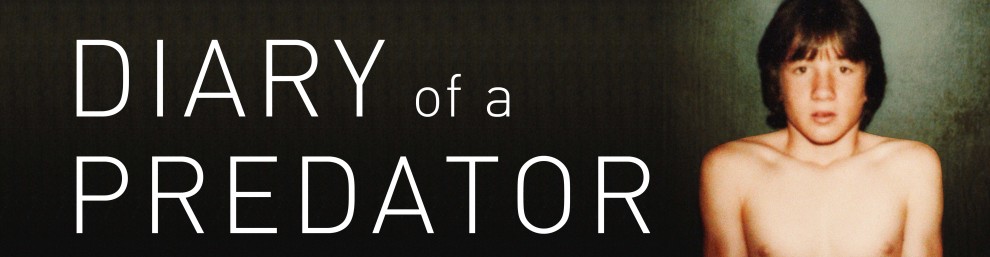
Note from Amy: The following is an excerpt from the beginning of my book, Diary of a Predator: A Memoir.

I can’t remember much about when I was real young except fear and shame and lack of courage.
—Brent Brents

This is the story of one of America’s most notorious sexual criminals, Brent Brents, from his childhood of horrific abuse to his adulthood on the streets of Denver, where he stalked, raped, and tortured multiple victims before police captured him in February 2005.

Brent pleaded guilty to eighty criminal charges, including sexual assault, kidnapping, and attempted murder, and in July 2005 received the largest sentence in Colorado history: 1,509 years.

At the time I started working on Brent’s case, I was a Denver Post criminal justice reporter, cynical and driven. I’ve often said this is
the tale of two predators—one a criminal, the other a journalist—for don’t we as journalists often prey upon people for their story? So this is also the account of my own awakening.

The year before his case erupted, I coauthored an all-consuming investigative series about sexual assault and domestic violence in the
military called “Betrayal in the Ranks.” Fellow Post staffer Miles Moffeit and I invested every fiber of our beings into those stories to honor the amazing women who counted on us to be their voice, leaving behind our families, our friends, and our health in the process. The series prompted investigations and spurred congressional reforms, but left me empty and exhausted. It took me months to truly care about journalism again, and then the Brents case caught my attention.

The prospect of writing about sexual crime from the perspective of the perpetrator, not the survivor, revived my interest.
He was the most predatory criminal I’d ever encountered, and I hoped that through him, I would perhaps understand all the faceless
men who had assaulted the hundreds of survivors whose stories I’ve told and carried all these years, like a heavy bag of so many broken hearts.

I scrutinized him as I would a bug under a microscope—indeed, that’s what I told him. Yet my curiosity was never tinged with
hate, a reaction that I soon learned to my surprise would alienate me from just about everyone I knew, especially those in my
own newsroom. There’s no such thing as objectivity in journalism.

Still, I was pumped by the amazing opportunity: Criminals on the scale of Brents rarely cooperate with efforts to pick their brain.
Coincidentally, it was my lack of contempt that prompted Brents to continue to call and write me. As one former FBI profiler told me,
“You did one thing right from the very beginning, and that’s why he talked to you: You never judged him.”

Instead, I began to judge myself.
I did not expect what would happen—that by probing Brents for the story of how he was made, I would uncover parts of myself in
the process. His case affected me in ways I could not have predicted, for it illuminated my growing disillusionment with the callous media of which I was a part. Those effects continue to this day, as does the correspondence between us that began shortly after his capture and included him sending me his journal, a meticulous record of his crimes and his history. I have been able to verify his accounts by corroborating the details through interviews with officials and witnesses, as well as court records and criminal and medical reports.

Because of the unprecedented access he allowed me, this book is more than simply the true story of the crimes Brents committed.
It is also the rare story of the psyche of the sociopathic man revealed and the impact it had on the journalist covering the case. Through Brents, I realized truths about the human condition and our assumptions of evil—that it is not assigned, but constructed. I also discovered I could no longer continue to be the reporter I once had been, forsaking myself and my family to pursue a story.

Throughout the book, I make use of excerpts from his journal, our letters, and interviews, in addition to the extensive research I conducted as a reporter. Anything attributed to Brents journal is exactly as he wrote it, including punctuation and spelling.

With his history and “jacket”—the notoriety of his crimes that accompanies him to prison—Brents expects to eventually be killed
by other inmates. “My biggest fear,” he wrote me, “is that I will die without ever having done anything good.”

His experience of the world is violent, calculating, pathetic, and wrenching—but it is still the same world in which we all live. It is
Brents’ hope, and mine, that by presenting his life in unflinching fashion, we will learn something from it.

November 2010
To the reader:
As you read this book, you may find yourself experiencing
a wide range of emotions. But I ask of you only to keep an
open mind.
You may very well find yourself full of opinion towards
myself and the author. No matter how you feel about me
or my actions—hate me, be wary of my sincerity if you
choose—please, if you are a parent, planning on being a
parent or are someone who is responsible for the wellbeing
of children: Treat them with dignity, respect and love. Be
good role models. Teach them empathy, compassion and
integrity. Regardless of your financial, emotional and
physical situations, show them how to overcome and achieve.
Be loving and attentive. Listen to them, hear them, spend
time with them and nurture them. Most of all, give them
your heart forever so that they will become good people.
—B. Brents

Leave a comment

Filed under The story

A Dream Realized: Barnes & Noble Book Stores Now Carrying Diary of Predator: A Memoir

Diary of a Predator: A Memoir at Barnes & Noble

Diary of a Predator: A Memoir is now available at Barnes & Noble book stores, such as this location in Boulder, Colo. | Photo by Amy Herdy

When I first started working on the true-crime book about serial rapist Brent Brents that became Diary of a Predator: A Memoir my husband told me he would no longer go to bookstores with me.

The reason? I would walk past some of the trite or atrocious titles on the shelves and start to feel depressed. It wasn’t that I thought Diary of a Predator was so much better; I was just convinced it had a story–and a message–that was worthwhile, and I fretted the book would never get a chance.

I hoped, but did not expect, that I would see it on the shelf of a major bookstore. Publishing statistics show there are more than 100,000 new books published every year, yet most bookstore chains (like Barnes & Noble) stock only a fraction of them–about 10,000 titles.

So I was very happily shocked when I got a call from a buyer for Barnes & Noble a few weeks ago. She said they planned to put Diary of a Predator: A Memoir in some of their top true-crime-selling stores around the country.

One such store is in Boulder, at 30th and Pear Street. I visited it the other day, and sure enough, there was Diary of a Predator: A Memoir, right on the shelf in the “True Crime” section.  It’s hard to describe the feeling I got when looking at my book there on the shelf. Diary of a Predator: A Memoir is the culmination of a career covering crime and out of that, the five years I devoted to the stubborn notion that this book would inspire and educate people.

And that’s the most gratifying part of all:  Hearing from folks that reading this book left them wanting to be a better person, or spread some good in the world.

So thank you, Barnes & Noble, for helping to get Diary of a Predator: A Memoir out there.

1 Comment

Filed under The story

an act of faith

Years ago, before I had even begun writing Diary of a Predator: A Memoir, when it was still just a germ of an idea that I called “The book,” Brent Brents wrote this to me:

“Someone once said that ‘every work of art is an act of faith.’  You writing this book is going to be a work of art, it is going to be an act of faith.”

I looked up the rest of the quote, and it resonated with me so much that I’m going to repeat it here. It’s from British novelist Jeanette Winterson, and it speaks to one of the main reasons I wrote this book–to reach out with its message:

“I think every work of art is an act of faith, or we wouldn’t bother to do it. It is a message in a bottle, a shout in the dark. It’s saying ‘I’m here and I believe that you are somewhere and that you will answer, if necessary, across time, not necessarily in my lifetime.”

-Jeanette Winterson

1 Comment

Filed under Brents' writings

Why Did Jerry Sandusky Do It?

There are many studies that link child sexual abuse to that person becoming a perpetrator in later life, and Diary of a Predator: A Memoir is a perfect case study of that–Brent Brents committed crimes that were a direct reflection of the abuse he received as a child.

 If you look at Jerry Sandusky’s childhood circumstances, you can see that he could very well have been a victim of child sexual abuse. When Jerry Sandusky was six–a vulnerable age–his family moved into an upstairs apartment of the Brownson House, a recreation center for troubled boys. By all accounts, thousands of troubled youth passed through that center, which included facilities for basketball, football and baseball-and which would have included locker rooms with showers (details from Jerry Sandusky’s case include him sexually abusing boys in a locker room shower).
 The following is from a study by the British Journal of Psychiatry in 2001:
The risk of being a perpetrator is enhanced by prior victim experiences, doubled for incest, more so for peodophilia, and even higher for those exposed to both peodophilia and incest. This suggests that, in this selected sample, the experience of being a victim of peodophilia may have a more powerful causative influence in giving rise to the subject becoming a perpetrator than does incest, and the joint experience of being exposed to both peodophilia and incest has the most powerful effect.
  This view is supported by the frequent clinical finding that the abuser’s target age-group is usually limited to the age when he was himself abused. The abusive act is a traumatic one — however cooperative the victim might appear to be — and the change from being the passive victim to the active perpetrator, making use of the mechanism of identification with the aggressor, is the way in which some victims repeatedly attempt to master the trauma. The use of psychological mechanisms, particularly splitting and denial, which enable the abuser to believe he is being benevolent when he is being abusive, are further characteristics which the victim acquires through his identification with the perpetrator.
-It sounds like that’s exactly what Jerry Sandusky did.  And it’s definitely what Brent Brents did–he became a perpetrator in order to try to gain control over his feelings of helplessness, rage and victimization.

It does not excuse the horrible actions of either man, neither Brent Brents nor Jerry Sandusky. But it does help explain them.

Leave a comment

Filed under The story

Gods Green earth is fair Game

I’m including an except below from serial rapist Brent Brents’ journal that’s in my book, Diary of a Predator: A Memoir, because of its chilling self description.

But first, something from James Gilligan: “The living dead.”

-That’s a term for violent men from the book, Violence: Reflections On A National Epidemic, by James Gilligan, M.D., and it resonates with me because it’s similar to how Brent Brents describes himself.

Gilligan, who directed the Center for the Study of Violence at Harvard Medical School, is the former medical director of the Bridgewater State Hospital for the criminally insane and was director of mental health for the Massachusetts prison system.

To call violent prison inmates “the living dead” is not a metaphor he invented, Gilligan says in his book; rather, it’s a summary of how the men describe themselves, that they cannot feel anything, that their souls are dead.

He goes on to write, “They have dead souls because their souls were murdered. How did it happen?”

The answer, Gilligan says, was “a degree of violence and cruelty…in childhood…so extreme and unusual that it gives a whole new meaning to the term ‘child abuse.'”

Which is exactly how Brent Brents was created–horrific and habitual child abuse. And it doesn’t excuse his actions, but it certainly helps explain them, and understanding violence takes us one step closer toward preventing it.

As for the self description written by Brent Brents, I begin the start of nearly every chapter of  Diary of a Predator: A Memoir with an excerpt from one of his letters or from his journal (which is also featured in large portions throughout the rest of the book). This is at the start of chapter One, A Hunter at Work:

I could easily be Bundy i think he had the same fucked up
brain the release was never Achievable. What realy hurts me
deep is that there are a few things and people I can sincerely
care for and love and would never hurt but the rest of Gods
Green earth is fair Game. I am truly a fucked up dangerous
person and were the opportunities to present themselves I
would act. It hurts me to admit this. I am sorry for hurting
all those other people, Truly but how can i be any kind of
Good or decent if i cant stop my mind from Working Like it
does. I look back to when i was a kid and i realy think i went
crazy. Death is the only solution to this.
—From Brent’s journal

Leave a comment

Filed under The story

if we are to change futures

Here’s another comment sent to this website today by Kathy, who heard the interview  on Colorado Public Radio regarding my book, Diary of a Predator: A Memoir, which is about my experiences covering the case of serial rapist Brent Brents.

“Thank you so much. You told truths that are hard to hear but necessary if we are to change futures. I am glad you helped Mr. Brents find his humanity.”

You are welcome, Kathy, and it’s folks like you who take the time to connect who inspire me. So thank you for for writing.

Amy

1 Comment

Filed under The story

showing children kindness

Ryan Warner of Colorado Public Radio interviewed me regarding my book about covering the case of serial rapist Brent Brents, Diary of a Predator: A Memoir, and I’ve been very gratified by the positive reaction I’ve received.

Today I received a comment to this website that said in part:

“I just heard you on NPR. Kol ha’Kavod, Hebrew for ‘All the respect.’…You quoted what I think is the opening quote of the book, about showing children kindness. Please put this in a prominent place on your website…”

So here ’tis. Happy holiday, all.

November 2010
To the reader:
As you read this book, you may find yourself experiencing a wide range of emotions. But I ask of you only to keep an open mind.
You may very well find yourself full of opinion towards myself and the author. No matter how you feel about me or my actions—hate me, be wary of my sincerity if you choose—please, if you are a parent, planning on being a parent or are someone who is responsible for the wellbeing of children: Treat them with dignity, respect and love. Be good role models. Teach them empathy, compassion and integrity. Regardless of your financial, emotional and physical situations, show them how to overcome and achieve. Be loving and attentive. Listen to them, hear them, spend time with them and nurture them. Most of all, give them your heart forever so that they will become good people.
—B. Brents

Leave a comment

Filed under Brents' writings

Is Being a Sociopath a Choice?

Someone recently said this about my book, Diary of a Predator: A Memoir, which is about my experience covering the case of serial rapist Brent Brents:

“Yes, he had a troubled childhood, however so many others do and don’t become a sociopath.”

That line started me thinking: Does someone choose to become a sociopath?  I started looking up research, which points to three factors that contribute to someone being a sociopath:

1. Genetics. Where Brents is concerned, that’s a check. Records and accounts from family members indicate that Brents’ father was a violent, sadistic man. The two children from his second marriage were removed from the home because of his abuse, and Brents and his brother, the product of his father’s third marriage, were removed from the home but records show Brents was returned for unknown reasons.

2. Brain abnormality, either caused from genetics or brain injury. Check. When he was 12, Brents suffered a left orbital blowout fracture (his left eye socket was crushed) and he had seizures ever since.  Research indicates that a sociopath’s brain is different from a normal brain–that it has little activity in the orbital cortex, the area of the brain that controls behavior.

3. Child abuse. Check. Brents’ severe, systematic abuse at the hands of his father is documented in medical records.

I’m not saying these factors are an excuse for the violence Brents upon others. He still ultimately made choices.  But perhaps it could explain why someone like Brents demonstrated such violence and  a lack of empathy–because his brain was predisposed toward it, lacked the ability to recognize the consequences of it on others and the abuse inflicted upon him was his model.


1 Comment

Filed under The story

Reader: It Will Stay with Me Forever

This comment was sent to me through the Diary of a Predator website just this morning from a woman in the U.K. who read my book, Diary of a Predator: A Memoir. I’m sharing this letter because it underscores exactly why I wrote the book. It’s incredibly gratifying to know people like her exist:

“I just finished reading your book and I have to say it was amazing.  I am very interested in the criminal mind and am sure I have missed my calling as a criminal psychologist/forensic person and this is the book I have been waiting for.  I watch loads of show on serial offenders, loads of psychology, read true crime, etc, and the ‘why’ has always fascinated me.  I found myself laughing at Brent, crying with you, and getting so angry at the reporter who got him put into solitary that it surprised me!!

I would like to thank you for writing this book, for the courage it took both you and Brent Brents to write it and for the compassion you have.  I am a Wiccan and my husband is a Buddhist, and I am filled with empathy for people who others shudder to think how anyone could have.  We are always trying to grow in that way and to use compassion as our compass and you have shown me a new way to do so, you and other people in the book, such as Margaret and Ellen (I think?  woman who lost her daughter in a car crash).  There is always, always, another story underneath the ones we see on the surface and you have proved that in a way that totally surprised me.  I feared he would kill himself before he found something worthy in himself to himself, and that fact surprised me.  I really felt sorrow and sadness for how his life ended up.  And I hope that he continues to grow in the way he was in the book.  To feel that in spite of what he did his life is worth something.

Amazing.  Thanks for writing this book, thanks for showing it from the side of the predator and thanks to Brent for being so honest.  It will stay with me forever, the story and the lesson. Thanks to you both.  Great courage you both displayed.  Amazing.”

Leave a comment

Filed under The story

Reader question: How can I avoid being hurt by someone like Brents?

I got an email from someone who’s about halfway through reading Diary of a Predator: A Memoir  that said, “The book is fascinating, but it also scares me to death.”

Toward that end, the young woman said,  “I’d like to know from these kinds of folks what the best way is to avoid being hurt by them.

“And I’d like to know that from you, too. What do you see are the steps women in particular can take to avoid being victimized and brutalized? Brents attacked these people in their own homes. Did those people leave their doors unlocked? Was there ANY WAY the attack could have been prevented? And he didn’t just attack young people. Or single people.

“It’s just terrifying, and I’m really really hoping that by the end of the book I will have found some answer as to how I can make sure
that never happens to me, because honestly, that’s precisely why I’m reading this book. To figure out how to live a peaceful, happy life free from horrific and brutal terror. I’m reading it to inform myself about how to keep people like Brents as far away from me as humanly possible, and how to counsel those I love to do the same. What are your thoughts?”

And this was my reply:

As for prevention, awareness and precautions–there is not a special section of the book that I devote to that. The entire book itself is really a cautionary tale of awareness, but to have put a how-to section in it would totally change the genre and halt the pace. It’s a dual memoir. As such, the story unfolds.

And if it fills you with such fear, then I would suggest that you’re probably missing the overall message, which is one of compassion and that we are all, ultimately, responsible for each other…
Yes, his case is terrifying. And yes, his utter lack of regard for humanity and the fact he was such a predator is what makes it so uncomfortable to read. No, there is nothing his victims could have done to prevent his attacks or fight him off–the scenarios that play out in the book illustrate that, time and again. Also, I chose not to explore that because that starts to sound like victim blaming–What could they have done to prevent their attack? Nothing, absolutely nothing; not a locked door, or a weapon, or any amount of pleas would have kept anyone safe from him when he was on a rampage.
Which is why we are left with the bigger question, which I explore at the end, of How do we prevent someone like him from existing? That’s the bigger question that takes into account a bigger picture.
As for your specific, concrete safety concerns, I can tell you what I’ve learned from many conversations with Brents and other criminals like him: Always lock your doors and windows at home, and never leave your car unlocked. Always be aware of your surroundings. Listen to your gut (that one should actually go first).
And since sadists like him are calculated to be only about 2 percent of all rapists–I would fight like hell (note from Amy here–that’s my personal opinion, and not one espoused by law enforcement).
He told me once that the best way to fight off someone like him is to draw as much blood as possible in the first thirty seconds and that if that doesn’t do it, then give up, because it will only motivate him more.
Last, get a dog. I’ve been a crime reporter for 20 years and I can tell you that all the criminals will agree–a barking dog is a deterrent.

Leave a comment

Filed under The story