Tag Archives: rape

a larger percentage are rape, abuse or incest survivors

Note from Amy: Brent Brents suggested I check out the information about a documentary called “Searching for Angela Shelton.”

It does indeed look worthwhile. This is what he said:

She (Angela) goes all over the us talking to the Angela Sheltons she can find who will talk to her. She is an incest survivor. A majority of the Angela’s she finds (not all) but a larger percentage, are rape, abuse, or incest survivors. One woman she meets keeps track of sexual offenders for a living. She helps Angela confront her father.


Leave a comment

Filed under The story

Help Stop Rape in the Military: Call Your Senators!

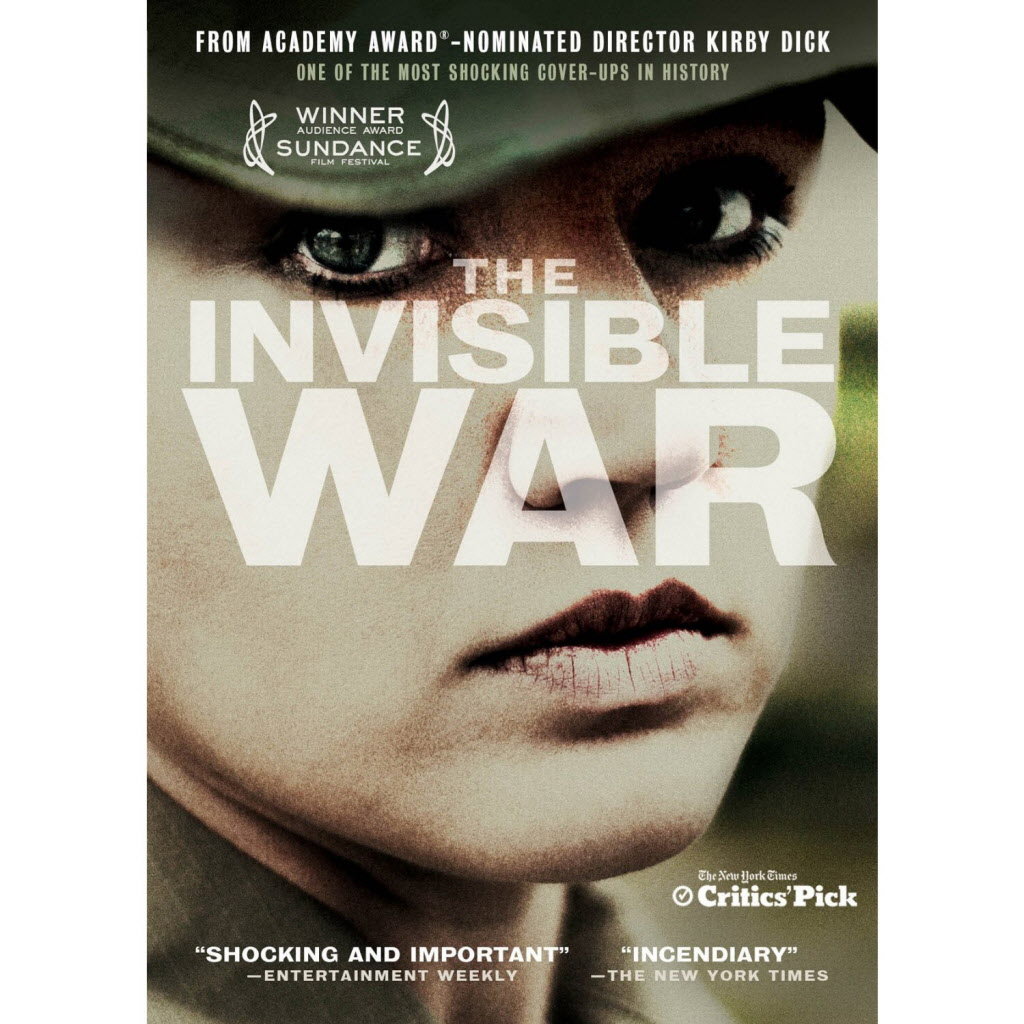
Note from Amy: The following is from the filmmakers of “The Invisible War,” the searing documentary about military sexual assault. Please read it and then click on the link to find the phone number of your senator–and call to tell them they need to support legislation to help end this crisis of rape in the military:

It’s come to light that not one, but two, officers in charge of sexual assault prevention in the military have themselves been accused of sexual assault. These are the very people who are meant to help ensure our servicemen and women are safe from the very crimes they have allegedly perpetrated.

Bill Briggs, an NBC News contributor, summed it up pretty well:

“The U.S. military seems increasingly incapable of policing itself or ridding its ranks of sexual predators…”

If you’re ready to move forward, call your Senators now and ask that they support legislation to move the decision to prosecute out of the chain of command.

Ask them to co-sponsor the Military Justice Improvement Act – the bicameral legislation introduced this morning by Senators Gillibrand, Boxer, Collins, Johanns, Blumenthal, Begich, Coons, Franken, Hirono, Mikulski, Shaheen and others.

That NBC news clip sums up exactly what our community has been arguing for over a year now. You know the saying… ‘the definition of insanity is doing the same thing over and over and expecting different results.’ Well, we’re not calling the military’s leadership insane, but there’s some pretty damning evidence out there.

The Pentagon needs an intervention. Enter the US Senate. With champions like Senators Kirsten Gillibrand, Barbara Boxer, Richard Blumenthal, Mark Begich, Susan Collins, Mike Johanns, Al Franken, Chris Coons, Mazie Hirono, Barbara Mikulski, and Representatives Tulsi Gabbard, Dan Benishek, Richard Hanna, and Kyrsten Sinema banding together, today there’s a bill before Congress that CAN and WILL help to break the cycle.

This new bill has the power not only to break the cycle of military sexual assault and end years of sweeping this issue (and its survivors) under the rug – it also creates serious accountability and protects future service members from suffering retribution from their commanding officers.

You can help make this bill into law. Call your Senator today and tell them to join the fight and sponsor this bill to take this out of the chain of command, once and for all.

Every 21 minutes another service member is assaulted. Let’s make sure they see the justice they’ve earned.

Thank you for making our fight #NotInvisible,

Amy Ziering and Kirby Dick
Filmmakers, THE INVISIBLE WAR

http://www.notinvisible.org/

Leave a comment

Filed under Uncategorized

Documentary Exposing Military Rape Scandal Premieres on PBS Tonight

Note from Amy: This email was from the filmmakers who made “The Invisible War,” a groundbreaking film that dives into the difficult issue of military sexual assault. I’m on their email list as someone who cares about the issue and because they interviewed me as a journalist for the film. I hope you take their plea to heart and tune in to watch this very worthy documentary:

Tonight, our award-winning investigative documentary – the film that sparked this movement to expose the epidemic of rape within the military – premieres nationally on PBS.


You’ve been with us through this long fight, and tonight is a moment we can all share as a community. But not everyone knows the importance of this issue. In addition to tuning in, will you help spread our message once more and find a friend to watch with? CLICK HERE to get details and find your local TV listing.


Having THE INVISIBLE WAR broadcast on national television, providing public access to stories like Trina and Kori’s, couldn’t come at a more critical time.

As you may have heard, last week, the Department of Defense released the Sexual Assault Prevention and Response Office (SAPRO) annual report, and it showed a significant spike in assaults – an increase of 35% over the last year. Over 26,000 service members were sexually assaulted in 2012 alone. Moreover, the report came out two days after an Air Force officer in charge of sexual assault prevention was himself arrested for sexual battery. It’s clear as ever: the military does not understand the plague within its ranks.

One of our champions in Congress, Senator Kirsten Gillibrand said it best:
“If the man in charge for the Air Force – in preventing sexual assault – is being alleged to have committed a sexual assault this weekend, obviously there’s a failing in training and understanding of what sexual assault is and how corrosive and damaging it is to good order and discipline.”

Military sexual assault isn’t just making headlines on Capitol Hill. Over the past week, President Obama also spoke out, saying that he has “no tolerance” for sexual assault. Adding, “they’ve got to be held accountable – prosecuted, stripped of their positions, court-martialed, fired, dishonorably discharged, period.”

For those 26,000 servicemen and women who survived assault last year, and the thousands more survivors, the news is promising but the fight is far from over. We must keep up the momentum and continue to take action until change is realized and “Zero Tolerance” becomes “Zero Occurrence.”

So tonight, as you tune in to PBS, share why this fight means so much to you – enlist one friend to help ensure military rape is #NotInvisible.

Onward,
Kirby Dick and Amy Ziering

http://www.notinvisible.org/

1 Comment

Filed under Uncategorized

Rape only happens when a predator, attacker or some shithead decides to take advantage

Note from Amy: In the following post, Brent Brents is referring to the Steubenville, Ohio rape case.

I believe in cases like this where the victims either drink or do drugs or are doped by some asshole These victims have a lot more guilt they deal with. Not to say they should. I think they think it is their fault for drinking or druging. But they shouldn’t feel guilt. Rape only happens when a predator, attacker or some shithead decides to take advantage of the victims in those situations. Like a high school football player who thinks he’s above the rules.

-Brent Brents 3-19-13

Leave a comment

Filed under Brents' writings

that same apologetic teary eyed act

So i kept a close watch on the Stubenville Ohio Rape case where the two high school football players raped that girl. I’m glad the judge found them guilty. Shamed that he only gave them one year in juvee. The one Kid got all teary eyed and broke down apologizing. But it wasn’t out of empathy for the young girl. It was for him realizing he had just lost all that was good for him. It was selfish. I know because i have given that same apologetic teary eyed act before. It was selfish.

It’s to bad he doesn’t get empathy. It’s taken me a lifetime to realize the power that people with empathy have. They are often seen as week but the truth is they are the strong. I am getting there. But i was that boy with the tears and choking sobs. They are touching. But I like him, I was only  just realizing how bad i screwed up and what the consequences meant for me.

-Brent Brents 3-19-13

Leave a comment

Filed under Brents' writings

Because Thoroughly Tackling the Topic of Military Sexual Assault is No Small Feat: The Invisible War is Nominated for an Oscar

If you had told me ten years ago that rape in the U.S. military would become a mainstream topic, I’d have laughed at you.

Decade after decade, after each sexual assault scandal such as Tailhook or the Air Force Academy, politicians would trumpet their outrage and military officials would swear they’d muster reform, like a hardened criminal making desperate, insincere promises to a parole board.

In 2003, while Miles Moffeit and I were researching for,  “Betrayal in the Ranks,” our three-part series about military sexual assault and domestic violence, reporters in Kentucky called us with a cautionary tale of how their publisher pulled a similar story of theirs, axing it because the U.S. had invaded Iraq and it seemed unpatriotic to call the military to task.

Thankfully, that love affair is over.

invisible warLast January, a film premiered at Sundance called “The Invisible War.” It tackled the crisis of sexual assaults within the U.S. military and dissected it with a painstaking, surgical attention to detail.

The filmmakers invited me to attend the premier because I’m interviewed in the film about my work covering the issue of military sexual assault, primarily the series I coauthored with Miles called “Betrayal in the Ranks.”

Afterward, I listened to all the talk from the politicians and the military officials, inwardly rolled my eyes, and waited for the apathy to once again roll in.

Well, halleluiah, my cynicism has been smacked down.

Secretary of Defense Leon Panetta viewed the film on April 14, 2012.  Two days later, Panetta ordered that all military sexual assault cases were to be handled by senior officers, ostensibly taking such cases away from potentially biased commanders who wouldn’t want the notoriety or disruption of a sexual assault investigation in their own unit.

Then over the summer, the Marines put together a new protocol for combating sexual assault. And just this month, President Barack Obama signed the National Defense Authorization Act for this fiscal year. This time, it included reforms aimed at the issue of military sexual assault, including policies to prevent retaliation against those who report.

Meanwhile, the public and the media have flung themselves fully into the fray, backing “The Invisible War” with enthusiastic reviews and using social media to propel the issue forward.

Now “The Invisible War” has oh so deservedly been nominated for an Oscar.  As a result, I’m heartened that a whole new audience will now pay attention–and that someday, soldiering in the U.S. will no longer be associated with rape.

Leave a comment

Filed under Uncategorized

What’s More Important: Rape of Tens of Thousands of Soldiers or Somebody’s Affair?

I wish everyone would calm down about the CIA adulterous scandal and become enraged over a much more important issue: sexual assault, including sexual assault in the U.S. military.

-This is what I’ve been thinking for several days now, and then someone did an excellent job of putting that into words by writing about the stunning documentary, “The Invisible War,” a film about the crisis of sexual assaults within the U.S. military, giving it proper context over the latest salacious story about Paula Broadwell.

I’m on the email list for director Kirby Dick and producer Amy Ziering, the creators of that outstanding Sundance award-winning documentary, “The Invisible War,”, and they sent me the below link to the piece that ran Monday in the Huffington Post.  I’m interviewed in the film because of my work covering the issue, primarily the series I coauthored at the Denver Post called “Betrayal in the Ranks.”

So please, take the time to read the story, and then forward the link to a friend. Secretary of Defense Leon Panetta needs to turn his attention to “The Invisible War” and the issues it exposes, not media hype about emails and affairs.

From The Huffington Post: “The real scandal is that this type of behavior — stumbled upon via highly questionable investigative practices — is what garners nonstop media coverage and glaring headlines while a real military sexual scandal, our U.S. military’s horrific rape epidemic, affecting tens of thousands of our service members (annually!!), goes unreported and ignored.” Read more.

Leave a comment

Filed under Uncategorized

Three Words That Triggered a Final Spree of Violence: “You Little Punk”

Brent Brents often told me his greatest fear was not of being killed, or tortured, or injured in any way–but of being shamed.

“Please don’t make me look stupid,” he would repeatedly say to me regarding publishing his writings, and when I asked him why the fear of humiliation held so much power over him, he didn’t have an answer.

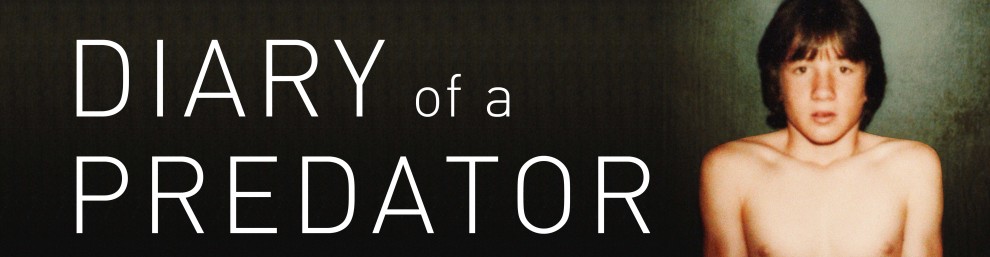
The very first time I interviewed him, Brents told me his final crime spree-where he raped three women and two children over the course of a weekend–was triggered by a police detective talking smack to him on the phone in an effort to get Brents, who had a warrant out for his arrest, to turn himself in. I write about it in Diary of a Predator: A Memoir.

“He called me a little punk. ‘Tell me where you’re at. I’ll come get you, you little punk,’” Brents told me. “I said, ‘Fuck you. Come get me.’”

Then, he said, “I worked myself into this rage, walked out of the coffee shop . . . [thinking] ‘You wanna play games? I can play games, too.’”

At the time, I thought it was a ridiculous excuse, and merely a way for Brents to avoid taking responsibility for his actions. And while he is indeed responsible for his actions, today I now understand the deep motivation that shame and humiliation play in inciting violence.

“I have yet to see a serious act of violence that was not provoked by the experience of feeling shamed and humiliated, disrespected and ridiculed, and that did not represent the attempt to prevent or undo this ‘loss of face’–no matter how severe the punishment, even if it includes death,” writes James Gilligan in his excellent book, Violence: Reflections On a National Epidemic.

“The purpose of violence is to diminish the intensity of shame and replace it as far as possible with its opposite, pride…”

The more trivial the matter, Gilligan says, the deeper the humiliation: “…their very  triviality makes it even more shameful to feel ashamed about them.”

Men who feel this way and act on it become violent because they feel they have no nonviolent alternative to boost their self esteem, Gilligan says. Also, with their sense of self threatened to be overwhelmed by shame, they lack the emotions of love and guilt that would normally prevent someone from becoming violent.

Again, it doesn’t excuse Brent Brent’s behavior–but it does help explain it.

Leave a comment

Filed under The story

I will die without ever having done anything good

Note from Amy: The following is an excerpt from the beginning of my book, Diary of a Predator: A Memoir.

I can’t remember much about when I was real young except fear and shame and lack of courage.
—Brent Brents

This is the story of one of America’s most notorious sexual criminals, Brent Brents, from his childhood of horrific abuse to his adulthood on the streets of Denver, where he stalked, raped, and tortured multiple victims before police captured him in February 2005.

Brent pleaded guilty to eighty criminal charges, including sexual assault, kidnapping, and attempted murder, and in July 2005 received the largest sentence in Colorado history: 1,509 years.

At the time I started working on Brent’s case, I was a Denver Post criminal justice reporter, cynical and driven. I’ve often said this is
the tale of two predators—one a criminal, the other a journalist—for don’t we as journalists often prey upon people for their story? So this is also the account of my own awakening.

The year before his case erupted, I coauthored an all-consuming investigative series about sexual assault and domestic violence in the
military called “Betrayal in the Ranks.” Fellow Post staffer Miles Moffeit and I invested every fiber of our beings into those stories to honor the amazing women who counted on us to be their voice, leaving behind our families, our friends, and our health in the process. The series prompted investigations and spurred congressional reforms, but left me empty and exhausted. It took me months to truly care about journalism again, and then the Brents case caught my attention.

The prospect of writing about sexual crime from the perspective of the perpetrator, not the survivor, revived my interest.
He was the most predatory criminal I’d ever encountered, and I hoped that through him, I would perhaps understand all the faceless
men who had assaulted the hundreds of survivors whose stories I’ve told and carried all these years, like a heavy bag of so many broken hearts.

I scrutinized him as I would a bug under a microscope—indeed, that’s what I told him. Yet my curiosity was never tinged with
hate, a reaction that I soon learned to my surprise would alienate me from just about everyone I knew, especially those in my
own newsroom. There’s no such thing as objectivity in journalism.

Still, I was pumped by the amazing opportunity: Criminals on the scale of Brents rarely cooperate with efforts to pick their brain.
Coincidentally, it was my lack of contempt that prompted Brents to continue to call and write me. As one former FBI profiler told me,
“You did one thing right from the very beginning, and that’s why he talked to you: You never judged him.”

Instead, I began to judge myself.
I did not expect what would happen—that by probing Brents for the story of how he was made, I would uncover parts of myself in
the process. His case affected me in ways I could not have predicted, for it illuminated my growing disillusionment with the callous media of which I was a part. Those effects continue to this day, as does the correspondence between us that began shortly after his capture and included him sending me his journal, a meticulous record of his crimes and his history. I have been able to verify his accounts by corroborating the details through interviews with officials and witnesses, as well as court records and criminal and medical reports.

Because of the unprecedented access he allowed me, this book is more than simply the true story of the crimes Brents committed.
It is also the rare story of the psyche of the sociopathic man revealed and the impact it had on the journalist covering the case. Through Brents, I realized truths about the human condition and our assumptions of evil—that it is not assigned, but constructed. I also discovered I could no longer continue to be the reporter I once had been, forsaking myself and my family to pursue a story.

Throughout the book, I make use of excerpts from his journal, our letters, and interviews, in addition to the extensive research I conducted as a reporter. Anything attributed to Brents journal is exactly as he wrote it, including punctuation and spelling.

With his history and “jacket”—the notoriety of his crimes that accompanies him to prison—Brents expects to eventually be killed
by other inmates. “My biggest fear,” he wrote me, “is that I will die without ever having done anything good.”

His experience of the world is violent, calculating, pathetic, and wrenching—but it is still the same world in which we all live. It is
Brents’ hope, and mine, that by presenting his life in unflinching fashion, we will learn something from it.

November 2010
To the reader:
As you read this book, you may find yourself experiencing
a wide range of emotions. But I ask of you only to keep an
open mind.
You may very well find yourself full of opinion towards
myself and the author. No matter how you feel about me
or my actions—hate me, be wary of my sincerity if you
choose—please, if you are a parent, planning on being a
parent or are someone who is responsible for the wellbeing
of children: Treat them with dignity, respect and love. Be
good role models. Teach them empathy, compassion and
integrity. Regardless of your financial, emotional and
physical situations, show them how to overcome and achieve.
Be loving and attentive. Listen to them, hear them, spend
time with them and nurture them. Most of all, give them
your heart forever so that they will become good people.
—B. Brents
Leave a comment

Filed under The story

“The Invisible War,” a Scathing Expose About Sexual Assault in the Military, Needs Your Help

Nobody likes to talk about rape.

That’s one of the reasons why it’s such an ongoing crisis in our country–it’s got that crippling stigma attached to it, and shame, and victim-blaming. Nowhere is that more pronounced than in our military.

I’m on the email list for director Kirby Dick and producer Amy Ziering, the creators of the outstanding documentary, “The Invisible War,” a film about the crisis of sexual assaults within the U.S. military. I’m interviewed in the film because of my work covering the issue, primarily the series I coauthored at the Denver Post called “Betrayal in the Ranks.”

Right now, the Invisible War team need your help.

The good news is, the New York Times has taken notice of this incredibly important issue by profiling the film in “Heroes, Villains and The Invisible,” written by Stephen Holden.

The article calls “The Invisible War” one of three festival films devoted to women’s rights,” and has said that “none of the films previewed matched the impact of “The Invisible War.”

The great news here is that the story is currently #16 on the NYT’s Most Popular List (Most Emailed and The Most Viewed, to be exact).

Let’s move that up. You can help show the media, and the public, and anyone else who is paying attention that these issues matter.

Go here and Share the article with a friend, Tweet and/or Post to Facebook:
Heroes, Villains and the Invisible

Please HELP!  Go to this link ( http://www.nytimes.com/2012/06/15/movies/human-rights-watch-film-festival-at-lincoln-center.html) and

  • EMAIL to a friend
  • Share on Facebook
  • Tweet – here’s a sample Tweet that you can also send without going to the article link:

    • Heroes, Villains and the Invisible http://nyti.ms/MKZz3b#NotInvisible@Invisible_War gets due notice TKU @nytimesin theatres 6.22

Thanks very much,

Amy

1 Comment

Filed under The story