Category Archives: The story

troubled children turning into psychopathic adults

A reader sent the following comment to this website today in response to the post “Can You Nip a Budding Psychopath in the Bud?”–regarding the story recently published in The New York Times Magazine about children being diagnosed as psychopaths:

I saw this article about psychopathic children and did not have an opportunity to read it until your link to it. It is quite the article and am glad I was able to read it.

As I read through the comments I noted that, as I myself thought, many did not agree that there would be no support for a mother of a psychopathic child. I thought that was a very interesting conclusion by the author.

Thanks again Amy for pointing out information in regard to troubled children turning into psychopathic adults and what is being learned to try to help them and maybe prevent more children from turning into psychopaths.

Mary

Leave a comment

Filed under The story

Is It Possible to Nip a Budding Psychopath in the Bud?

“Can You Call a 9-Year-Old a Psychopath?”

-That’s the title of a disturbing and yet fascinating piece that ran in the New York Times magazine on May 11, which I’m including the link to, below.

The 9-year-old in question is the oldest son of a Florida couple, and the details of his behavior–enraged one moment, chillingly calm the next while threatening a younger brother–make for a pretty good case that he’s a fledgling psychopath.

That in itself raises many questions: Is the term “psychopath” an unfair and dangerous label to put on a child? Or is it more dangerous to downplay callous, unemotional behavior that research shows is likely genetic in origin?

The age of the boy in the story strikes me as a sad coincidence–Brent Brents has often told me by that his own estimation, his “brain was broken” by age 9. What if someone had recognized his potential for violence when he was a child? Would intervention have changed him and therefore prevented the pain of all his victims?

Researchers are hoping that by identifying psychopathic tendencies early enough in a child, he or she can be helped–which can hopefully prevent that child from becoming an adult who is incapable of empathy yet also capable of inflicting great harm on others.

Or as one person in the piece said:

“You have to hope that’s true. Otherwise, what are we stuck with? These monsters.”

Here’s the story:

Leave a comment

Filed under The story

the violence of everyday life

A reader suggested I read the book Violence: Reflections On A National Epidemic, by James Gilligan, M.D., and I am so glad she did.

Gilligan directed the Center for the Study of Violence at Harvard Medical School, is the former medical director of the Bridgewater State Hospital for the criminally insane and was director of mental health for the Massachusetts prison system.

His book is brilliant and thoughtful. I haven’t gotten very far yet, but there are parts of it already worth quoting, such as this:

“…even the most apparently ‘insane’ violence has a rational meaning to the person who commits it, and to prevent this violence, we need to learn to understand what that meaning is…The psychological understanding of violence requires recognizing how much method there is in violent madness, and how much psychopathology there is in the violence of everyday life.”

It articulates better than I ever could why it’s important for us to learn from someone like Brent Brents.

Leave a comment

Filed under The story

The Invisible War: There is strength in numbers

I’m on the email list for the folks who made the outstanding documentary, “The Invisible War,” a film about the crisis of sexual assaults within the U.S. military. I’m interviewed in the film because of my work covering the issue, primarily the series I coauthored at the Denver Post called “Betrayal in the Ranks.”

And right now, I’m hopeful, because it seems like this time, real change is going to happen, not just the empty promises we heard after our series ran. So please, read the email below from Invisible War director Kirby Dick and producer Amy Ziering, and take a moment to be a part of this movement. There’s real momentum now–so don’t let it die.

Thanks,

Amy

“On Monday,  President Obama issued a statement declaring he was going to work to end the epidemic of sexual assaults within our Armed Forces.   As you know, since our film premiered at Sundance in January, we have had several strategic screenings for key policymakers and legislators in Washington.  In response to the resounding outcry that these viewings have  provoked, we are honored and humbled that today the issue managed to get the attention of our Commander and Chief.

But there is still much more that needs to be done to protect our troops.  As our film conclusively shows, the vast majority of sexual assaults in the military are committed by a small minority of service members who are serial perpetrators who carefully select, stalk, and assault their victims again and again.  The DoD needs to initiate a proactive strategy to go after these “enemies within.”
Help us make sure this happens:
  • Tweet this now: We applaud @BarackObama @whitehouse – stand up for truth & justice, change “Zero Tolerance” from rhetoric 2 reality. #Military #NotInvisible
  • Share this link with five friends – encourage them to watch the trailer, Follow us on Twitter and use the #NotInvisible hashtag in Tweets, and join the conversation on Facebook: http://www.invisiblewarmovie.com/eflier/ 
  • Pass this email on and ask friends and family to take action and tell the President that we applaud his statement, but will be here to keep holding the Administration accountable
Clearly our campaign is working and the more the President sees that the public appreciates his taking a stand on this issue, the more he will feel the pressure to ensure changes are enforced.
There is strength in numbers — you are the key to helping us affect the much needed and long overdue change that we all want to see.
So start tweeting!”
Amy, Kirby & The Invisible War Team
Www.InvisibleWarMovie.com

3 Comments

Filed under The story

if we are to change futures

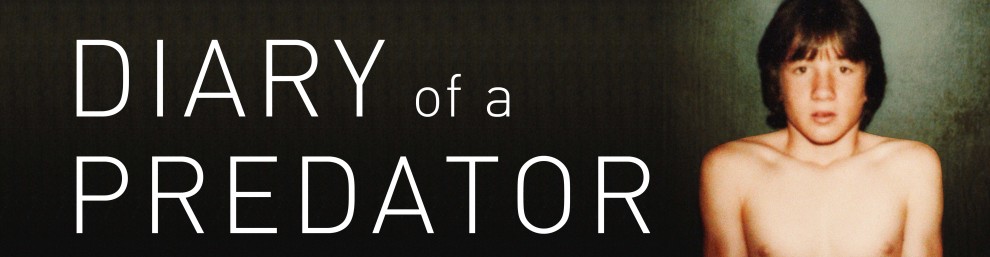
Here’s another comment sent to this website today by Kathy, who heard the interview  on Colorado Public Radio regarding my book, Diary of a Predator: A Memoir, which is about my experiences covering the case of serial rapist Brent Brents.

“Thank you so much. You told truths that are hard to hear but necessary if we are to change futures. I am glad you helped Mr. Brents find his humanity.”

You are welcome, Kathy, and it’s folks like you who take the time to connect who inspire me. So thank you for for writing.

Amy

1 Comment

Filed under The story

One Survivor to Another: There are People Affected by Your Honesty and Amazing Courage

I received the following message to this website, Diary of a Predator, only yesterday. The television show the writer refers to is “On the Case with Paula Zahn,” which featured an episode on the case of serial rapist Brent Brents called “Beyond Redemption.” :

Name: Joni
Comment: Ms. Herdy

Since first seeing the “Beyond Redemption” television show and having seen it several times since then, I’m compelled to contact you in the hope you can advise me how to proceed.

I read on your blog how respectful you are of Brent Brent’s victims and I’m so impressed by that. The last thing I want to do is cause m0re pain for any of them. This is why I need your help.

There was an Hispanic woman who was a victim of Brents’ that bravely went on the show. One thing she said effected me greatly and that I’ve never been able to forget. She was describing her feelings after the assault, one of which was “I feel stupid.” Like so many others, I have an assault in my past and I never used “stupid” to name my feelings.

But as soon as I heard her say it, I connected with her so strongly. Her affect was very, very flat and I wondered if she’d had counseling. Even now I cry for her.

What I’d like her to know more than anything is that she was never stupid, never deserving of the assault and that I know that profoundly. I will always remember her and wish her well. However, I would never want to force this contact on her or be hurtful or thoughtless.

Can you tell me the best way to proceed? If there is no way to let her know this, I accept that. I just want her to know that there are people out there who she has affected with her honesty and amazing courage.

Thank you so much for your bravery as well. You’ve taken a lot of criticism for your association with Brents.

Sincerely-Joni

So I made a phone call, and then I wrote her back.

Dear Joni,

That was a very kind and thoughtful letter.

You are referring to Margaret, and I still stay in touch with her. And your letter was so touching that I immediately called her and asked if  she wanted to know what it said, and she said yes. So I read it to her.

She was very touched. She still has a lot of fear about talking to people she doesn’t know, so she wasn’t comfortable emailing you back, but she wanted me to give you this message:

“It was really nice of you to remember me after all this time. Sometimes I feel very disconnected, and your letter made me realize I’m not so alone.

What happened to me was awful, but along the way I’ve met a lot of nice people.”

As for my being brave, well, I truly think it’s folks like Margaret-and you–who take the time to connect with others who are the brave ones.

I don’t know if you’ve read the book, but I have a long section in there about Margaret, because she taught me a lot about forgiveness.

Thank you for writing.

Amy

Bearing witness to that compassionate exchange between those two amazing women helps reinforce my faith in humanity.
Leave a comment

Filed under The story

He found one of his victims

I was chugging through my day today when a message was sent to this website, Diary of a Predator, that stopped me in my tracks:

“So this morning i woke up, and thought ‘valentines day’ then thought ‘ugh. Brent Brents’.  I did a search and found your site & book.
7 years ago today i had my near-brush with him…  I had just gotten back in town from a vacation and had no idea there was a serial rapist in denver/cap-hill.  It was valentines day and I was driving to my boyfriends house with a gift and expecting to have dinner.
I cut through the neighborhood behind Cheesman, and stopped at a 4-way-stop like no other.  The victimized grandmother flagged me down and i let her in my car, and that night turned into something crazy..  As you know BB affected a lot of people, even me.. my world was messed up and i left that night scared, upset, and mad at myself for not doing or trying to do any more that night.. I hate valentines day, and i know why.  But i don’t dare complain too much because what i went through doesn’t compare to what any of the victims went through.  i’ll never forgive myself for not doing more.
I guess the point of my email is to ask if you know if the Grandmother and 2 grand-daughters are ok now?

Alain”

And I replied:

“Hi, Alain,

My first reaction to your note was, Bless your heart. And yes, he certainly did affect a lot of people, and I can certainly understand that you’ve never forgotten that night. That’s a very traumatic experience. And it doesn’t take away from anything any of the victims went through to acknowledge that. You don’t have to have the traumatic event happen to you in order to be deeply affected by it–there is such a thing as secondary post traumatic stress disorder, and that comes from witnessing someone go through a horrible event. It sounds like you did everything you could to help the grandmother, and that there’s some “survivor’s guilt” there. Just my observation.

To answer your question, no, I don’t know how the grandmother and two girls are doing today–while I was still at the Post, the family declined contact, and I respected that with the book, feeling that to contact them would be invading their privacy.  I let the Denver DA’s office know before the website went up and the book came out so that they could give the victims a “heads up” about it. I do stay in touch with one of his victims, a woman from Aurora named Margaret, and life is a struggle for her every day. So yes, there’s a lot of residual damage.

It’s all so very sad.”

-And then I asked Alain if I could post his comment, and he gave me permission. And he ended his email with this:

“And ignore the haters that are mad at you for trying to understand BB, you really are giving the world a better insight to why people become what they are.  Understanding & knowledge are power to change the future.”

-And so I’m left with this thought: Bless your heart, Alain. And thank you.

Leave a comment

Filed under The story

Was His Father Also Abused?

After I asked the question, Is Being a Sociopath a Choice? in the previous blog, I received the following question to this website  about serial rapist Brent Brents:

Do you know his father’s history? Was he also a victim of abuse? It’s an interesting subject. I once heard that a majority of hard core criminals had fetal alcohol poisoning.

–Connie

The answer: I have a limited amount of information regarding Brent Brent’s father’s history.  According to Brent, his father told him once that he had been sexually as well as physically abused as a child.

Brent’s half sister, Shelley, who was removed from the home after her father (the same man, a different marriage) abused her and her younger brother, David, says she gathered family history from two aunts who told her that severe abuse on her father’s side had begun generations before.

I’m inclined to believe he was abused, and that it contributed to his taking out his rage upon his children. If you know anything about patterns, you know they often repeat themselves.  A sad legacy.

Leave a comment

Filed under The story

Is Being a Sociopath a Choice?

Someone recently said this about my book, Diary of a Predator: A Memoir, which is about my experience covering the case of serial rapist Brent Brents:

“Yes, he had a troubled childhood, however so many others do and don’t become a sociopath.”

That line started me thinking: Does someone choose to become a sociopath?  I started looking up research, which points to three factors that contribute to someone being a sociopath:

1. Genetics. Where Brents is concerned, that’s a check. Records and accounts from family members indicate that Brents’ father was a violent, sadistic man. The two children from his second marriage were removed from the home because of his abuse, and Brents and his brother, the product of his father’s third marriage, were removed from the home but records show Brents was returned for unknown reasons.

2. Brain abnormality, either caused from genetics or brain injury. Check. When he was 12, Brents suffered a left orbital blowout fracture (his left eye socket was crushed) and he had seizures ever since.  Research indicates that a sociopath’s brain is different from a normal brain–that it has little activity in the orbital cortex, the area of the brain that controls behavior.

3. Child abuse. Check. Brents’ severe, systematic abuse at the hands of his father is documented in medical records.

I’m not saying these factors are an excuse for the violence Brents upon others. He still ultimately made choices.  But perhaps it could explain why someone like Brents demonstrated such violence and  a lack of empathy–because his brain was predisposed toward it, lacked the ability to recognize the consequences of it on others and the abuse inflicted upon him was his model.


1 Comment

Filed under The story

A Tale of Two Predators, Indeed

A tale of two PredatorsI always brace myself when other media interview me, but Boulder Weekly Art & Entertainment Editor David Accomazzo was able to tackle the complicated elements of my book about covering the case of serial rapist Brent Brents, Diary of a Predator: A Memoir, and hone in on its essence in an articulate way:

“Herdy tells her side of her strange, unsettling relationship with the serial rapist in her book, Diary of a Predator. It’s a true crime retelling of  Brents’ story, but it’s also what Herdy calls a “dual memoir.” It’s both the story of Brents’ horrific childhood as well as an intensely personal, revealing look at Herdy’s role as the journalist telling his story, and the effect it wrought on her and her family. She describes the book in the prologue as ‘the tale of two predators — one a criminal, the other a journalist.'”

Read the rest of David’s piece: http://www.boulderweekly.com/article-7316-a-tale-of-two-predators.html

Leave a comment

Filed under The story