Tag Archives: book

showing children kindness

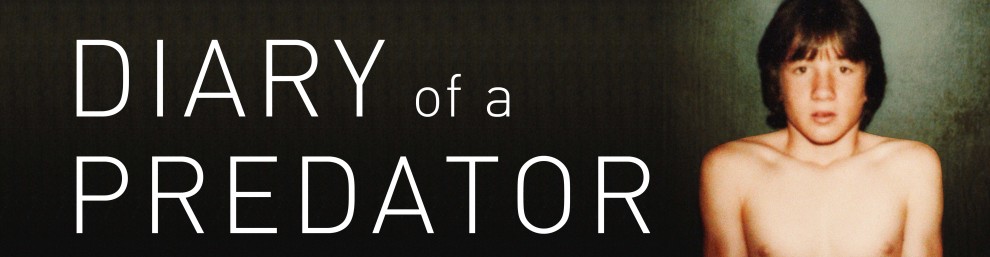
Ryan Warner of Colorado Public Radio interviewed me regarding my book about covering the case of serial rapist Brent Brents, Diary of a Predator: A Memoir, and I’ve been very gratified by the positive reaction I’ve received.

Today I received a comment to this website that said in part:

“I just heard you on NPR. Kol ha’Kavod, Hebrew for ‘All the respect.’…You quoted what I think is the opening quote of the book, about showing children kindness. Please put this in a prominent place on your website…”

So here ’tis. Happy holiday, all.

November 2010
To the reader:
As you read this book, you may find yourself experiencing a wide range of emotions. But I ask of you only to keep an open mind.
You may very well find yourself full of opinion towards myself and the author. No matter how you feel about me or my actions—hate me, be wary of my sincerity if you choose—please, if you are a parent, planning on being a parent or are someone who is responsible for the wellbeing of children: Treat them with dignity, respect and love. Be good role models. Teach them empathy, compassion and integrity. Regardless of your financial, emotional and physical situations, show them how to overcome and achieve. Be loving and attentive. Listen to them, hear them, spend time with them and nurture them. Most of all, give them your heart forever so that they will become good people.
—B. Brents

Leave a comment

Filed under Brents' writings

hellbent on the cancers of judgment/shame/blame

Note from Amy: The comment below is referring to the following post that Brent Brents wrote about one book review of  Diary of a Predator: A Memoir.

You know Some people out there Amy really don’t understand violence. Their lives are clean. The girl who wrote the review in the Daily Camera probably is one of those people. I’m glad for her. But sad to.

I think sometimes people need to know the reality. It sounds like you accomplished that in the book. -Brent Brents

And today I received this comment to the website:

Hi Amy & Brent:
The line from the article you linked that reads “when Herdy gives the perpetrator a voice, it feels wrong” is what is so wrong. If we don’t listen to what violent people say, how the hell are we ever gonna fix the problem? Seems like a no-brainer, but the dominant euro-christian culture is hellbent on the cancers of judgment/shame/blame and as long as that’s where the energy goes, change will not happen.

Sincerely,
Natasha

Leave a comment

Filed under Brents' writings

Their lives are clean

You know Some people out there Amy really don’t understand violence. Their lives are clean. The girl who wrote the review in the Daily Camera probably is one of those people. I’m glad for her. But sad to.

I think sometimes people need to know the reality. It sounds like you accomplished that in the book (note from Amy: he’s referring to the book, Diary of a Predator: A Memoir).

Maybe carrying that character from the book will make her more self aware in a good way.

Brent Brents 2-25-12

1 Comment

Filed under Brents' writings

He found one of his victims

I was chugging through my day today when a message was sent to this website, Diary of a Predator, that stopped me in my tracks:

“So this morning i woke up, and thought ‘valentines day’ then thought ‘ugh. Brent Brents’.  I did a search and found your site & book.
7 years ago today i had my near-brush with him…  I had just gotten back in town from a vacation and had no idea there was a serial rapist in denver/cap-hill.  It was valentines day and I was driving to my boyfriends house with a gift and expecting to have dinner.
I cut through the neighborhood behind Cheesman, and stopped at a 4-way-stop like no other.  The victimized grandmother flagged me down and i let her in my car, and that night turned into something crazy..  As you know BB affected a lot of people, even me.. my world was messed up and i left that night scared, upset, and mad at myself for not doing or trying to do any more that night.. I hate valentines day, and i know why.  But i don’t dare complain too much because what i went through doesn’t compare to what any of the victims went through.  i’ll never forgive myself for not doing more.
I guess the point of my email is to ask if you know if the Grandmother and 2 grand-daughters are ok now?

Alain”

And I replied:

“Hi, Alain,

My first reaction to your note was, Bless your heart. And yes, he certainly did affect a lot of people, and I can certainly understand that you’ve never forgotten that night. That’s a very traumatic experience. And it doesn’t take away from anything any of the victims went through to acknowledge that. You don’t have to have the traumatic event happen to you in order to be deeply affected by it–there is such a thing as secondary post traumatic stress disorder, and that comes from witnessing someone go through a horrible event. It sounds like you did everything you could to help the grandmother, and that there’s some “survivor’s guilt” there. Just my observation.

To answer your question, no, I don’t know how the grandmother and two girls are doing today–while I was still at the Post, the family declined contact, and I respected that with the book, feeling that to contact them would be invading their privacy.  I let the Denver DA’s office know before the website went up and the book came out so that they could give the victims a “heads up” about it. I do stay in touch with one of his victims, a woman from Aurora named Margaret, and life is a struggle for her every day. So yes, there’s a lot of residual damage.

It’s all so very sad.”

-And then I asked Alain if I could post his comment, and he gave me permission. And he ended his email with this:

“And ignore the haters that are mad at you for trying to understand BB, you really are giving the world a better insight to why people become what they are.  Understanding & knowledge are power to change the future.”

-And so I’m left with this thought: Bless your heart, Alain. And thank you.

Leave a comment

Filed under The story

Is Being a Sociopath a Choice?

Someone recently said this about my book, Diary of a Predator: A Memoir, which is about my experience covering the case of serial rapist Brent Brents:

“Yes, he had a troubled childhood, however so many others do and don’t become a sociopath.”

That line started me thinking: Does someone choose to become a sociopath?  I started looking up research, which points to three factors that contribute to someone being a sociopath:

1. Genetics. Where Brents is concerned, that’s a check. Records and accounts from family members indicate that Brents’ father was a violent, sadistic man. The two children from his second marriage were removed from the home because of his abuse, and Brents and his brother, the product of his father’s third marriage, were removed from the home but records show Brents was returned for unknown reasons.

2. Brain abnormality, either caused from genetics or brain injury. Check. When he was 12, Brents suffered a left orbital blowout fracture (his left eye socket was crushed) and he had seizures ever since.  Research indicates that a sociopath’s brain is different from a normal brain–that it has little activity in the orbital cortex, the area of the brain that controls behavior.

3. Child abuse. Check. Brents’ severe, systematic abuse at the hands of his father is documented in medical records.

I’m not saying these factors are an excuse for the violence Brents upon others. He still ultimately made choices.  But perhaps it could explain why someone like Brents demonstrated such violence and  a lack of empathy–because his brain was predisposed toward it, lacked the ability to recognize the consequences of it on others and the abuse inflicted upon him was his model.


1 Comment

Filed under The story

A Tale of Two Predators, Indeed

A tale of two PredatorsI always brace myself when other media interview me, but Boulder Weekly Art & Entertainment Editor David Accomazzo was able to tackle the complicated elements of my book about covering the case of serial rapist Brent Brents, Diary of a Predator: A Memoir, and hone in on its essence in an articulate way:

“Herdy tells her side of her strange, unsettling relationship with the serial rapist in her book, Diary of a Predator. It’s a true crime retelling of  Brents’ story, but it’s also what Herdy calls a “dual memoir.” It’s both the story of Brents’ horrific childhood as well as an intensely personal, revealing look at Herdy’s role as the journalist telling his story, and the effect it wrought on her and her family. She describes the book in the prologue as ‘the tale of two predators — one a criminal, the other a journalist.'”

Read the rest of David’s piece: http://www.boulderweekly.com/article-7316-a-tale-of-two-predators.html

Leave a comment

Filed under The story

A Conversation on Forgiveness

———- Forwarded message ———-
From: Stephanie
Date: Thu, Jan 12, 2012 at 4:08 PM
Subject:
To: Amy Herdy

Conversation Cameron and I JUST had. I thought you’d be amused.

Steph:  I’m okay at understanding and forgiveness if it’s something done against me. But if someone hurts someone I love, it’s a completely different story.  However, I have found myself to be more close minded and judgmental than I would like to admit.
Cameron:  really? didn’t expect that, to be honest. and i can forgive anything done to me not so much to others.
Steph:  I’m trying to force myself to see other people’s perspective when I don’t agree with them, and I find that to be very difficult.
Cameron:  fair. someone’s reading amy’s book.
Steph:  hahahahaha. finished it yesterday.

Leave a comment

Filed under The story

Reader: It Will Stay with Me Forever

This comment was sent to me through the Diary of a Predator website just this morning from a woman in the U.K. who read my book, Diary of a Predator: A Memoir. I’m sharing this letter because it underscores exactly why I wrote the book. It’s incredibly gratifying to know people like her exist:

“I just finished reading your book and I have to say it was amazing.  I am very interested in the criminal mind and am sure I have missed my calling as a criminal psychologist/forensic person and this is the book I have been waiting for.  I watch loads of show on serial offenders, loads of psychology, read true crime, etc, and the ‘why’ has always fascinated me.  I found myself laughing at Brent, crying with you, and getting so angry at the reporter who got him put into solitary that it surprised me!!

I would like to thank you for writing this book, for the courage it took both you and Brent Brents to write it and for the compassion you have.  I am a Wiccan and my husband is a Buddhist, and I am filled with empathy for people who others shudder to think how anyone could have.  We are always trying to grow in that way and to use compassion as our compass and you have shown me a new way to do so, you and other people in the book, such as Margaret and Ellen (I think?  woman who lost her daughter in a car crash).  There is always, always, another story underneath the ones we see on the surface and you have proved that in a way that totally surprised me.  I feared he would kill himself before he found something worthy in himself to himself, and that fact surprised me.  I really felt sorrow and sadness for how his life ended up.  And I hope that he continues to grow in the way he was in the book.  To feel that in spite of what he did his life is worth something.

Amazing.  Thanks for writing this book, thanks for showing it from the side of the predator and thanks to Brent for being so honest.  It will stay with me forever, the story and the lesson. Thanks to you both.  Great courage you both displayed.  Amazing.”

Leave a comment

Filed under The story

Reader question: How can I avoid being hurt by someone like Brents?

I got an email from someone who’s about halfway through reading Diary of a Predator: A Memoir  that said, “The book is fascinating, but it also scares me to death.”

Toward that end, the young woman said,  “I’d like to know from these kinds of folks what the best way is to avoid being hurt by them.

“And I’d like to know that from you, too. What do you see are the steps women in particular can take to avoid being victimized and brutalized? Brents attacked these people in their own homes. Did those people leave their doors unlocked? Was there ANY WAY the attack could have been prevented? And he didn’t just attack young people. Or single people.

“It’s just terrifying, and I’m really really hoping that by the end of the book I will have found some answer as to how I can make sure
that never happens to me, because honestly, that’s precisely why I’m reading this book. To figure out how to live a peaceful, happy life free from horrific and brutal terror. I’m reading it to inform myself about how to keep people like Brents as far away from me as humanly possible, and how to counsel those I love to do the same. What are your thoughts?”

And this was my reply:

As for prevention, awareness and precautions–there is not a special section of the book that I devote to that. The entire book itself is really a cautionary tale of awareness, but to have put a how-to section in it would totally change the genre and halt the pace. It’s a dual memoir. As such, the story unfolds.

And if it fills you with such fear, then I would suggest that you’re probably missing the overall message, which is one of compassion and that we are all, ultimately, responsible for each other…
Yes, his case is terrifying. And yes, his utter lack of regard for humanity and the fact he was such a predator is what makes it so uncomfortable to read. No, there is nothing his victims could have done to prevent his attacks or fight him off–the scenarios that play out in the book illustrate that, time and again. Also, I chose not to explore that because that starts to sound like victim blaming–What could they have done to prevent their attack? Nothing, absolutely nothing; not a locked door, or a weapon, or any amount of pleas would have kept anyone safe from him when he was on a rampage.
Which is why we are left with the bigger question, which I explore at the end, of How do we prevent someone like him from existing? That’s the bigger question that takes into account a bigger picture.
As for your specific, concrete safety concerns, I can tell you what I’ve learned from many conversations with Brents and other criminals like him: Always lock your doors and windows at home, and never leave your car unlocked. Always be aware of your surroundings. Listen to your gut (that one should actually go first).
And since sadists like him are calculated to be only about 2 percent of all rapists–I would fight like hell (note from Amy here–that’s my personal opinion, and not one espoused by law enforcement).
He told me once that the best way to fight off someone like him is to draw as much blood as possible in the first thirty seconds and that if that doesn’t do it, then give up, because it will only motivate him more.
Last, get a dog. I’ve been a crime reporter for 20 years and I can tell you that all the criminals will agree–a barking dog is a deterrent.
Leave a comment

Filed under The story

Writing Diary of a Predator: A Memoir

Part three:

When writing a non-fiction book, at some point it’s a good idea to show a draft of it to people who are experts on the topics you’re covering. Since my book was true crime, I figured the best constructive criticism I could get would be from cops.

Actually, I didn’t have much hope as far as the “constructive” part. Since the main storyline of the book centered on the case of a serial rapist (Brent Brents) I expected the conversations to go something like this:

“No, I didn’t read it. And why the hell would you want to write about that sonofabitch?”

Still, I called on four screening candidates; two in Tampa (where I used to live), and two in Denver. A homicide detective, a street cop who was now a private detective, a narcotics detective and a vice detective.

I emailed the first chapter and the summaries of the rest, now filled out by notes, and braced myself for a flurry of contempt, like I was proposing a tax increase on the upper bracket to a room full of Republicans.

Instead, much to my surprise, the reaction was curiosity and encouragement.

“It’s pretty good,” said the street-cop-turned-private-detective. “You need more detail about what he looks like in that first scene,  though.”

“Good for you!” said the vice cop. “I thought it was interesting.”

“Are you alright?” asked the homicide detective on the phone. He called me immediately after reading a section that detailed the emotional difficulties of covering the case. “Yes, that was years ago!” I told him.

And the biggest compliment came from the narcotics detective, who said he was intrigued by the revelations about how Brents’ mind worked, but that he found the parts about the life of a reporter the most fascinating of all.

“You work the same way we do–it’s just you’re going after a story and not the arrest,” he said to me in surprise.  And then he added the line that at this point I was used to hearing: “Put more of you and the reporter stuff in there.”

So I did. And about the time I started thinking things were taking shape and the story was really coming together, I got a call from someone who wanted me to write a different book altogether.

To be continued…

Leave a comment

Filed under The story