———- Forwarded message ———-
From: Stephanie
Date: Thu, Jan 12, 2012 at 4:08 PM
Subject:
To: Amy Herdy
Conversation Cameron and I JUST had. I thought you’d be amused.
———- Forwarded message ———-
From: Stephanie
Date: Thu, Jan 12, 2012 at 4:08 PM
Subject:
To: Amy Herdy
Conversation Cameron and I JUST had. I thought you’d be amused.
Filed under The story
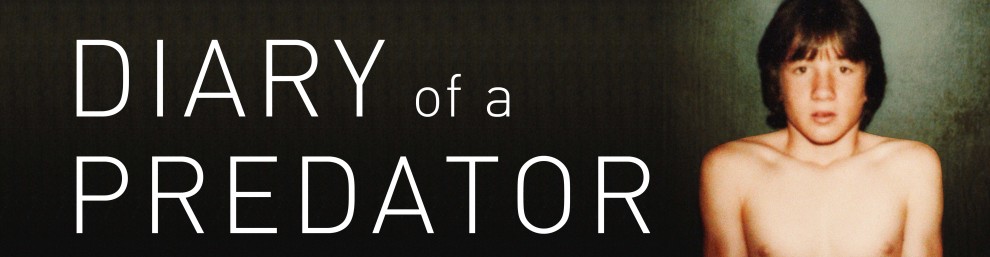
This comment was sent to me through the Diary of a Predator website just this morning from a woman in the U.K. who read my book, Diary of a Predator: A Memoir. I’m sharing this letter because it underscores exactly why I wrote the book. It’s incredibly gratifying to know people like her exist:
“I just finished reading your book and I have to say it was amazing. I am very interested in the criminal mind and am sure I have missed my calling as a criminal psychologist/forensic person and this is the book I have been waiting for. I watch loads of show on serial offenders, loads of psychology, read true crime, etc, and the ‘why’ has always fascinated me. I found myself laughing at Brent, crying with you, and getting so angry at the reporter who got him put into solitary that it surprised me!!
I would like to thank you for writing this book, for the courage it took both you and Brent Brents to write it and for the compassion you have. I am a Wiccan and my husband is a Buddhist, and I am filled with empathy for people who others shudder to think how anyone could have. We are always trying to grow in that way and to use compassion as our compass and you have shown me a new way to do so, you and other people in the book, such as Margaret and Ellen (I think? woman who lost her daughter in a car crash). There is always, always, another story underneath the ones we see on the surface and you have proved that in a way that totally surprised me. I feared he would kill himself before he found something worthy in himself to himself, and that fact surprised me. I really felt sorrow and sadness for how his life ended up. And I hope that he continues to grow in the way he was in the book. To feel that in spite of what he did his life is worth something.
Amazing. Thanks for writing this book, thanks for showing it from the side of the predator and thanks to Brent for being so honest. It will stay with me forever, the story and the lesson. Thanks to you both. Great courage you both displayed. Amazing.”
Filed under The story
When I first heard the commercial on the radio, I couldn’t believe it. I’ve never heard a public awareness campaign about child sexual abuse, but that’s exactly what it was, on behalf of the Denver Children’s Advocacy Center. So, bravo, DCAC. Keep it up.
The public service announcement urged listeners to know the facts about child sexual abuse, and referred back to their website, where I found some sobering stats, including:
Filed under The story
It’s not often that I’m floored by a comment to this website. But I was stunned by this one, addressed to Brent from a woman who identified herself as Shelley:
” i am the child of a monster as you know. We have the same father. I think we have a choice in life i choose not to be a product of my genetics.You made a choice to become what you are. We all have a past we must deal with. Some of us talk or cry and some of us Brents relive the crimes that were done to us on others. you made a choice.”
I emailed Shelley, and she emailed back, and then we talked on the phone–and yes, she is legit–she is Brent Brent’s half sister. And I told her that I agree with her, and that Brent has said the same on many occasions–that he made his choices.
As for Shelley–she is an amazing person–resilient, smart, and kind. She has her own story to tell, and it’s horrifying and it’s tragic, but she survived. I’ll let Shelley decide what she wants to share. The bottom line is, she chose a different life, and didn’t let its beginning define her.
It’s heartening to me that people like Shelley exist.
-Amy
Filed under The story
I got an email from someone who’s about halfway through reading Diary of a Predator: A Memoir that said, “The book is fascinating, but it also scares me to death.”
Toward that end, the young woman said, “I’d like to know from these kinds of folks what the best way is to avoid being hurt by them.
“And I’d like to know that from you, too. What do you see are the steps women in particular can take to avoid being victimized and brutalized? Brents attacked these people in their own homes. Did those people leave their doors unlocked? Was there ANY WAY the attack could have been prevented? And he didn’t just attack young people. Or single people.
“It’s just terrifying, and I’m really really hoping that by the end of the book I will have found some answer as to how I can make sure
that never happens to me, because honestly, that’s precisely why I’m reading this book. To figure out how to live a peaceful, happy life free from horrific and brutal terror. I’m reading it to inform myself about how to keep people like Brents as far away from me as humanly possible, and how to counsel those I love to do the same. What are your thoughts?”
And this was my reply:
As for prevention, awareness and precautions–there is not a special section of the book that I devote to that. The entire book itself is really a cautionary tale of awareness, but to have put a how-to section in it would totally change the genre and halt the pace. It’s a dual memoir. As such, the story unfolds.
Filed under The story
I got a call the other day from someone who read my book, Diary of a Predator: A Memoir, and he said one of the things he found amazing was the account of how one of Brent Brents’ victims, a woman named Margaret, forgave Brents for what he did to her.
I agreed. Even as I was covering her case, Margaret’s ability to find compassion in the midst of all of her own pain, anger and sorrow astounded me. To this day, she remains one of my heroes.
After hanging up the phone with that reader, I thought, “I wonder how Margaret is doing?” and so I gave her a call. I left her a voice mail, and she called me back the next day.
“I was just thinking the other day, ‘I wonder how Amy’s doing?’–and then you called,” she told me. “Pretty funny.”
And when I asked about her life, she answered me, in true Margaret fashion, with a stream of consciousness. Like many survivors of rape who struggle with Post Traumatic Stress Disorder, Margaret said she still often has a hard time leaving the house. Her marriage fell apart, and she cannot hold down a job. She applied for disability and was turned down, but she’s got a lawyer and is appealing.
More than anything, she continues to fight to heal. But I’ll let Margaret put it in her own words, which she said I could post here:
“The therapist tells me, You don’t wanna think about it. But if you don’t think about it then you dream about it.
When I go to sleep I have nightmares, and I don’t even remember what about.
Filling out a job application–my hands are shaking, I feel like they’re watching me: “What’s going on? Stupid!”
-That’s when I started noticing, What’s left of Margaret? I know that I have to feel better. But when, I don’t know.
I don’t think I’ll ever be the same but I’ll work on getting on with my life.
It’s going to be tough but I’m not gonna let it bother me forever. You have to move on. If you stay mad forever you will tear yourself up even worse. I look at anger as a bad thing and I try to leave it behind.
I’m sure he had a lot of anger, a lot of hurt and anger. I feel bad for everything that happened to him. Maybe someday down the road I can read everything.
I feel bad still but I know there are a lot of people who have it worse. So in a way I feel lucky.”
-Margaret 11-18-11
Filed under The story
Part three:
When writing a non-fiction book, at some point it’s a good idea to show a draft of it to people who are experts on the topics you’re covering. Since my book was true crime, I figured the best constructive criticism I could get would be from cops.
Actually, I didn’t have much hope as far as the “constructive” part. Since the main storyline of the book centered on the case of a serial rapist (Brent Brents) I expected the conversations to go something like this:
“No, I didn’t read it. And why the hell would you want to write about that sonofabitch?”
Still, I called on four screening candidates; two in Tampa (where I used to live), and two in Denver. A homicide detective, a street cop who was now a private detective, a narcotics detective and a vice detective.
I emailed the first chapter and the summaries of the rest, now filled out by notes, and braced myself for a flurry of contempt, like I was proposing a tax increase on the upper bracket to a room full of Republicans.
Instead, much to my surprise, the reaction was curiosity and encouragement.
“It’s pretty good,” said the street-cop-turned-private-detective. “You need more detail about what he looks like in that first scene, though.”
“Good for you!” said the vice cop. “I thought it was interesting.”
“Are you alright?” asked the homicide detective on the phone. He called me immediately after reading a section that detailed the emotional difficulties of covering the case. “Yes, that was years ago!” I told him.
And the biggest compliment came from the narcotics detective, who said he was intrigued by the revelations about how Brents’ mind worked, but that he found the parts about the life of a reporter the most fascinating of all.
“You work the same way we do–it’s just you’re going after a story and not the arrest,” he said to me in surprise. And then he added the line that at this point I was used to hearing: “Put more of you and the reporter stuff in there.”
So I did. And about the time I started thinking things were taking shape and the story was really coming together, I got a call from someone who wanted me to write a different book altogether.
To be continued…
Filed under The story
Part two.
When I first started writing the book, I put together the requisite non-fiction book proposal: I wrote the first chapter, summaries of the rest of the chapters, and an overview. Then, as I said earlier, the interested publisher got fired, my literary agent never called me back and I decided to give the book project a break.
A really long break.
Every once in a while, I’d open up the Word file and peek at the chapter and the summaries. It was a standard true-crime book, told in narrative fashion, which is my favorite form of writing and one that I learned at the St. Petersburg Times. And slowly, the heavy rock of discouragement lifted, and I started to be drawn back to the book more and more.
The tweaking began.
And since all writers need feedback, I started cautiously asking different people if they’d give their opinions. I eventually got downright bold about it, emailing the entire thing first to my sister, and then to a close friend.
“Not bad,” they both said. “But you need to put more of yourself in it.”
Ak! That’s not what reporters do. We are classically trained in, Just the facts, ma’am, and we don’t insert ourselves into our stories.
But these were people whose opinions I respected, so I revealed a little more of what it was like to report on that serial rapist case.
And they became like hungry baby birds: “More! More!”
So I did. And the more I revealed, the easier the self disclosure became. Soon it wasn’t enough to just detail the process and the effects of covering this case, I decided that I needed to include some of my history so that the reader would have context for my reactions and choices.
And then I took a deep breath, and gave the bare bones of the book to an audience I was sure would hate it: Cops.
To be continued…
Filed under The story
Part one: During all my years as a working journalist, my favorite part of the process was sitting down at my desk with a stack of notebooks beside me and a blank computer screen in front of me. I loved it for the Rubik’s cube-like challenge of putting all the details neatly into place, even though this usually happened under the constraints of a ticking deadline clock and sometimes with an editor literally breathing down my neck, demanding, “How close are you?”
I never had writer’s block, ever. I never missed a deadline. Since I usually wrote the lead to the story in my head while driving back to the newsroom, and the lead is the hardest part, the rest of it would fall into place like a row of obedient dominoes.
And then I decided to write a book, and found to be true what a friend of mine predicted, “Writing that book is going to kick your ass.”
The volume of the material was overwhelming: The court file alone was more than 500 pages. I had dozens of filled notebooks, stacks of documents I’d copied from Brents’ case file at the public defender’s office, transcripts of police interviews and copies of police reports.
I also had hundreds of pages of letters and journal entries from Brents, and he continued to write, sending letters every week. They filled a filing cabinet, and when that overflowed, I bought another.
The idea of the book soon loomed like the proverbial elephant in the living room, only this elephant was a hulking, smelly woolly mammoth with sharp spikes for tusks. I wanted nothing to do with it.
I told myself that I was too busy to try to start writing the book, that the material was so complex that it couldn’t be tackled in between juggling a family and a full-time job.
I told myself I needed time to get over the crushing blow of having a major, albeit controversial, publisher interested in it only to be fired the very week we were supposed to meet, swiftly followed by the crushing blow of my first literary agent simply disappearing on me.
And all those things were true. But what I really needed in order to be able to write that book was to slowly come to the realization that this wasn’t going to be simply a true-crime book; that in order to tell the story properly I had to do it fully. That meant opening a vein and revealing parts of myself that were deeply personal, as well as stepping back from my beloved craft and writing about the dark side of journalism itself.
Coming up: Writing Diary of a Predator: A Memoir, part two.
Filed under The story
I read this at the book signing held at The Book Cellar in Louisville, so I thought it only fair to share it with the rest of you.
And for those who have emailed me and said they’d like to know more about the process of writing this book–please know I will get to that this week in a series of posts. Writing this book was a formidable, complicated task that I put off for years until suddenly I knew it was time. And then it flowed. But more on that later. Here’s the excerpt. Thanks for visiting.
-Amy
From Diary of a Predator: A Memoir
He sat on top of a brick wall that bordered a downtown Denver parking lot and waited.
It was a perfect vantage point—high enough to give him a bird’s eye view of every direction and yet shielded by the shadows of nearby buildings to prevent any glint of streetlight reflecting off his wire-rimmed glasses. As a hunter of humans, he knew the importance of those things.
Ever the patient wolf, he flexed his thick forearms while he waited for a sheep to appear. And then he saw her and had instant recognition. He knew he had seen her before—he never forgot a face—and it only took him a moment to remember where: first on TV months ago, talking about some story dealing with rape in the military, and then later on the Denver Post elevator. A reporter. He’d still been in prison when those military rape stories ran, and watched her on the news. She was sharp and earnest, and had a fierce energy to her that had caught his attention. She reminded him of that social worker he once knew, the modern-day crusader. She also had long brown hair, like Teresa.
Now she was within his sights, and he sized her up: Wearing a dark suit, she was tall and athletic-looking, but he had brute strength
and the element of surprise. And it would be so easy—just a hop off the wall and a few quick strides, and he could cut her off before she
reached her car. No one was around to hear if she tried to scream.
Just then, she passed under a street light, and through the curtain of her long, straight brown hair, he caught a glimpse of her face. She looked so . . . sad. Heavily burdened, as if any moment, she would dissolve into tears. He sat rooted as she unlocked her car and got inside and then did something unexpected: laying her cell phone on the dash, she pulled out a pen from behind her right ear, tucked her hair back in its place, closed her eyes, and just sat there.
Minutes passed, and he stared, feeling unable to move. He found himself scanning the street, not wanting anyone to disturb her. Then
she sighed deeply, started the Jeep’s engine, and drove away.
Still seated on the wall, the man stared after the car. He would see her again.
He’d make a point of it.
Filed under The story